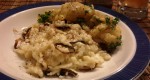
 Vorarlberger Käsknöpfle sind ein typisches Vorarlberger Gericht, welches sich nicht gravierend von den Allgäuer oder Schwäbischen Kässpätzle unterscheidet.
Wichtig ist allerdings die Auswahl des Käses. (Vorarlberger) Berg-, Räß- sowie Sauerkäse (Sura Käs) werden verwendet. Über das korrekte Mischverhältnis gibt es viele Meinungen. Ich tendiere da zu 2⁄4 Berg- und jeweils 1⁄4 Räß- sowie Sauerkäse. Die letzten beiden sind nämlich auch relativ intensiv im Geschmack. Zwiebeln werden in Butterschmalz karamellisiert und als Topping auf den Knöpfle verteilt.
Auch unterscheiden sich die Vorarlberger Käsknöpfle von den Spätzle durch die Form. Es sind eher kleine Kugeln als langgezogene Spätzle, dazu bedarf es eines entsprechenden Knöpflehobel o.ä.den man wohl auch nur in Vorarlberg bekommt.
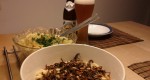 Essentiell ist auch (schwäbischer oder bayrischer – jedenfalls ohne Mayonnaise marinierter) Kartoffelsalat als Beilage sowie manchmal Apfelmus (auch als Dessert). Dazu trinkt man ein gutes (Weiß-)Bier und meist anschließend einen Schnaps. Mahlzeit!
Abstract Mouse and keyboard are being used as general purpose device despite the fact that for e.g., gaming or 3D modeling different input options are considered better. Therefore an alternative approach of human computer interaction is described and analyzed with the help of the Microsoft Kinects natural user interface tools. As an example of a gesture based application, a conducting software is developed. This implementation is analyzed from a practical perspective to show real world usage.
So if you travel to Amsterdam and have only a couple of days to explore this beautiful city, you do not want to waste time finding the best restaurants or the best bars there. I have listed some of my personal favorite places to stay for lunch, dinner or drinks in Amsterdam. I have also a short list of accommodations to stay while in Amsterdam.
Der Herr Köhntopp hat wieder einmal einen Blogpost geschrieben, der mir direkt aus der Seele spricht. Ich kann das ganze mehr oder weniger Voll und Ganz unterschreiben, möchte vielleicht lediglich etwas ergänzen.
Ich habe ja das Gefühl, viele Universitäten – also die Theorie-Institutionen und Nachwuchs-Produzierer – haben einen gravierenden Fehler (zumindest in meinem Fachbereich der Informatik). Es wird zu oft von zu schlechten Unis zu viel für vermeintliche Wissenschaft gemacht sowie Theorie erlernt die in der Realität weit daneben ist.
Was vor Jahren noch nach einer guten Idee aussah, ist wohl spätestens 2012 gescheitert. Was ursprünglich einen richtig guten Hintergedanke aufweisen konnte ist zur Masche der Lebensmittelindustrie geworden.
Es gibt wohl keinen einzigen Supermarkt, ja auch keinen einzigen Discounter mehr, der keine Bio-Produkte im Sortiment hat. Blöd nur, dass das nichts mit dem Gedanken Bio an sich zu tun hat.
Heute werden uns mitten im Winter Bio-Tomaten (in der 4er Plastikverpackung) angeboten, zu Weihnachten gibt es Bio-Erdbeeren und der neueste Schrei sind Bio-Avocados aus Mexico.
Der Bloging-Kollege Martin Eichenberg hatte eine coole Idee. Lasst uns doch unser Travel Setup teilen. Dazu hat er schnell mal eine kleine Miniseite “Das Travel Setup” auf seinem Blog erstellt und freut sich auch neue Einträge. Ein paar Einträge gibt es schon und ich habe auch gleich daran teilgenommen.
Since I recently got an iPad2 from my employer, I am able to update my blog from everywhere thanks to pretty decent 3g coverage in Austria. However, what you want to use if you start blogging from your iPad with your WordPress blog, is the native WordPress App which is available for free in the Appstore.
I will hopefully start to blog more often with this new opportunity. Let’s give its a try.
I was wondering how to create an Intent with the Android SDK which will not be pushed on top of the history stack. Which means, if another Intent will be started, the back button pressed event will not move back to the specific Intent. Actually this is done pretty easy with setting a FLAG_ACTIVITY_NO_HISTORY. An example the is given with the following code snipped.
Google released Google+. But what they are doing is actually fight back Content-Farms with stupid “content” and Facebooks Social-Graph.
Their first step was change the algorithms to calculate the search results different. Do not trust websites which just give you lots of buzz- and keywords. Remove content in search results which was optimized by companies (SEO) to generate a lot of traffic. That is neither what the web is in need of nor what a typical user wants to read.
Ja, wie es bereits Kristian Köhntopp schreibt, man hätte diese Statistik wohl besser nicht erstellt. However.
Nur amazon.de, keine digitalen Bestellungen sowie keine amazon.com Bestellungen.
 Vorarlberger Käsknöpfle sind ein typisches Vorarlberger Gericht, welches sich nicht gravierend von den Allgäuer oder Schwäbischen Kässpätzle unterscheidet.
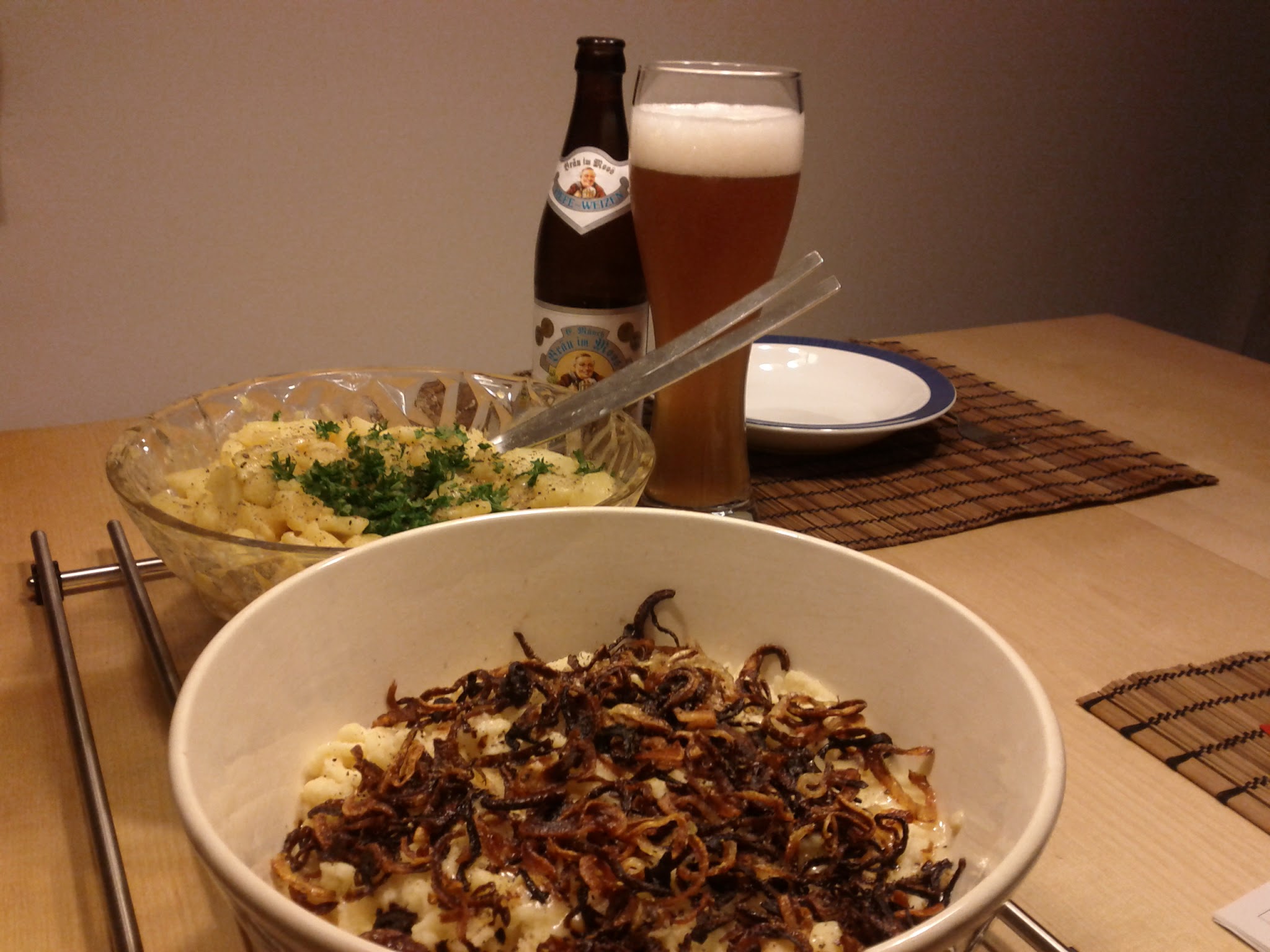 Essentiell ist auch (schwäbischer oder bayrischer – jedenfalls ohne Mayonnaise marinierter) Kartoffelsalat als Beilage sowie manchmal Apfelmus (auch als Dessert). Dazu trinkt man ein gutes (Weiß-)Bier und meist anschließend einen Schnaps. Mahlzeit!